Quiet the Noise and Come Home to Yourself

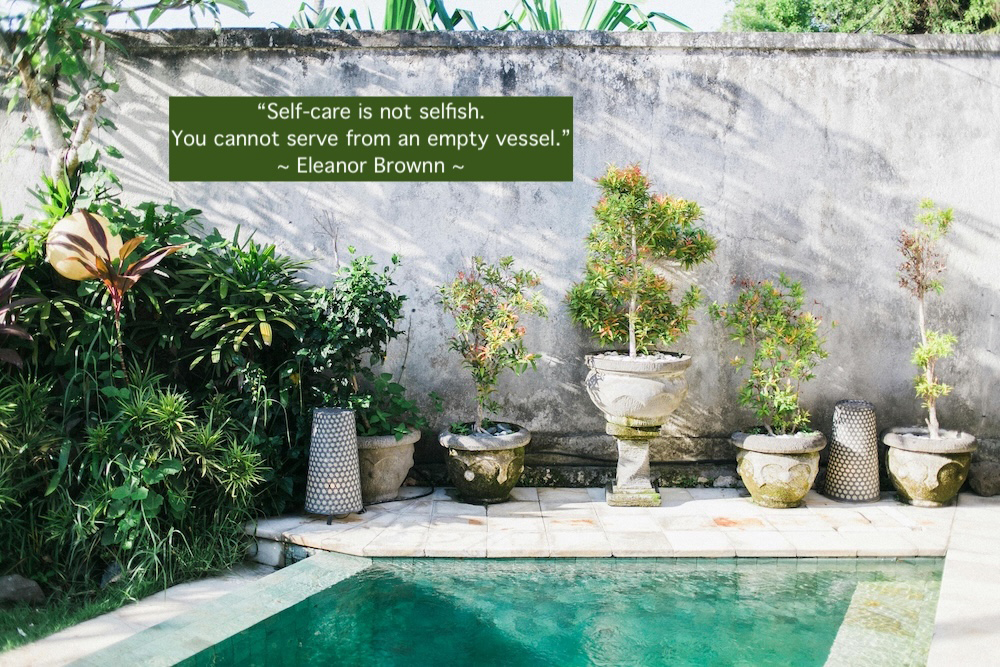
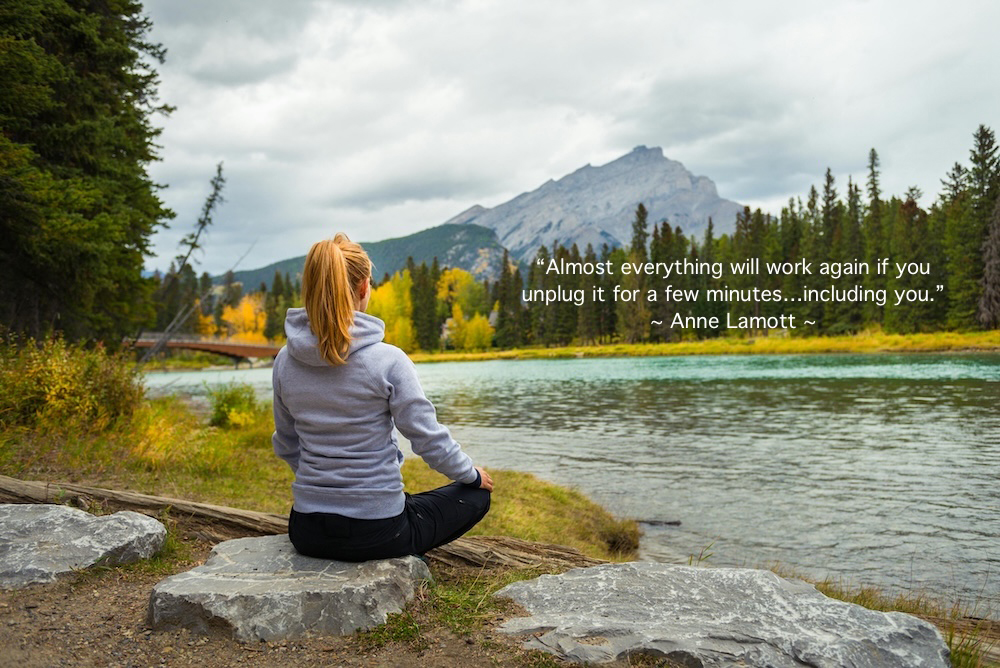
Photo of a lake in the mountains with the words "We cannot see our reflection in running water. It is only in still water that we can see." - Confucius

Are you feeling as disquieted as I am by the amount of dissonant noise in the world right now? Yes, I want to know what is going on so I can take action in an aligned way. Yes, I want to be informed so I know who to reach out to with offers of support and compassion. But, at some point, my whole system gets overwhelmed, and even the smallest amount of social media and news stops being helpful…and starts becoming the problem.

  • Not because the advice is wrong.
  • Not because the information isn’t valuable.
  • But because you can no longer hear yourself.

This is where so many of us find ourselves right now.

  • Constant input.
  • Constant expectations.
  • Constant pressure to stay relevant, informed, responsive.
  • And yet… internally? Disconnection.

You know how to lead others.
You know how to execute.
You know how to think strategically.

But when it comes to you…your direction, your next move, your truth, it feels… quieter. Harder to access. Easier to override.

So, you keep going. You push through. You tell yourself you’ll reconnect “later.” But later keeps moving.

Here’s what I see in the leaders I work with:

  1. Clarity does NOT come from doing more and tuning in to more noise. It comes from LESS.
  2. From pausing long enough to hear what’s already there inside you.
  3. Coming home to yourself isn’t a vague concept. It’s a practice that requires your commitment to yourself and your intentional attention.

What does it look like?
✔️ Turning down the external volume
✔️ Sitting in stillness without needing immediate answers
✔️ Letting your nervous system settle before making decisions
✔️ Remembering that your internal voice doesn’t compete—it waits

Remember your truth is not gone. It’s just been masked by all the dissonance and noise, like a boisterous relative at a holiday dinner that always cuts you off and shuts you down. This is where real self-leadership begins again—not externally, but internally.

This week, I invite you to experiment with this:

  1. Before you reach for input outside of yourself… pause.
  2. Ask yourself: What do I already know that I’m not honoring?
  3. Let that be enough for the moment.

If you’re craving clarity but feel buried under noise, this is the work I do every day with my clients. Send me a message or book a 1:1 conversation with me here.

Sometimes the most powerful shift is simply creating space to hear yourself again.

Energy Is Your Most Strategic Asset

photo of a woman at the top of a mountain with the sun rising in the background. Saying "The most important work of a leader is not the management of time, but the stewardship of their own energy." - Inspired by Peter Drucker

Ambitious professionals are trained to optimize time, and the norms of the business world requires this of us.

  • Calendars are color-coded.
  • Productivity systems are refined.
  • Efficiency is celebrated.

But very few leaders are trained to manage their energy. Energy — not time — determines the quality of your thinking, your presence, your health, and your resilience.

Right now, attention is under assault.

  • Notifications.
  • News cycles.
  • Industry shifts.
  • Economic uncertainty.
  • Extreme weather events.
  • Organizational instability.

It is easy to be constantly activated. And activation feels productive. But it is expensive.

I ask clients a simple question:
“Does this energize you and align with your purpose — or deplete you and distract you?”

Most have never paused long enough to evaluate. Instead, they:

  • Respond to what’s urgent.
  • React to what’s loud.
  • Absorb cultural narratives without questioning whether they are personally true.

But these behaviors drain your most strategic asset: energy.

When you conserve your energy for what genuinely matters, something shifts.

You become more intentional about:

  • What conversations you enter.
  • What debates you engage.
  • What opportunities you accept.
  • What environments you tolerate.

You also begin redefining how you resource yourself. Money and credit are resources.

  • So are skills.
  • So is health.
  • So is preparedness.
  • So is imagination.
  • So is community.

Here is the shift many don’t expect:

  • Self-regulation is not self-care fluff.
  • It is leadership discipline.
  • If your energy is fragmented, your leadership will be fragmented.
  • If your nervous system is constantly overstimulated, your decisions will reflect that.
  • If your attention is scattered, your strategy will be too.

The a-ha moment is this:

You do not need to do more. You need to protect more.

  1. Protect your health.
  2. Protect your imagination.
  3. Protect your attention.
  4. Protect your alignment.

Energy is not infinite. But it is renewable — if you stop leaking it into places that do not matter.

I offer you this closing reflection:

  • Where is your energy currently going that does not align with your deeper purpose — and what would change if you consciously reclaimed it?

Choose one small shift this week that protects your energy — a boundary, a walk outside, a “no” you’ve been postponing, a practical step toward preparedness.

Leadership is not just what you produce. It’s how well you regulate and resource yourself.

What’s one place you’re ready to reclaim your energy?

#LeadershipTransformation #CareerTransition #ExecutiveCoaching #Emergence

Staying in Your Lane in a World of “Should”

photo of a jail cell with saying "Care about what other people think and you will always be their prisoner." - Lao Tzu

There is subtle exhaustion happening among all of us, especially high achievers. Not from overwork alone.

From over-performing.

What do I mean by over-performing?

  1. Social media says you should show up consistently.
  2. Industry leaders say you should build a visible personal brand.
  3. Your peers say you should attend more events.
  4. Advisors say you should diversify, expand, scale.

The word “should” quietly infiltrates your calendar. Before long, you are operating in ways that look impressive but feel unnatural. And exhausting.

Here’s what I notice with many leaders:

  • They know how they do their best work.
  • They know how they genuinely like to engage.
  • They know their natural rhythm.

But they override it in an attempt to do what they feel they “should” do to appear successful to others.

This is not ambition. It’s conformity disguised as strategy. Staying in your lane does not mean shrinking. It means aligning.

  • Some leaders thrive in small, high-trust rooms.
  • Others thrive on stages.
  • Some think best alone before speaking.
  • Others think best out loud.

None is superior. But misalignment is costly.

When you engage in ways that aren’t natural to you:

  • Your energy drains faster.
  • Your voice becomes less clear.
  • Your decisions become reactive.
  • Your presence feels performative.

The deeper question isn’t “What should I be doing to stay relevant?”

  • It’s “How do I want to engage?”

Why? Because sustained leadership is built on congruence.

  1. If you are introverted but forcing hyper-visibility, you will burn out.
  2. If you are relational but hiding behind output, you will feel unseen.
  3. If you are visionary but drowning in operations, you will feel constrained.

The a-ha shift here is simple but confronting:

  • Success that requires you to be someone else is not sustainable success.

Your sweet spot is not a limitation. It is your leverage. When you operate inside your genuine strengths and preferred modes of engagement:

  • You move with less friction.
  • You attract more aligned opportunities.
  • You stop chasing environments that don’t fit.

Letting go of “should” can feel risky. There may be:

  1. Fewer appearances.
  2. Fewer posts.
  3. Fewer rooms.

But there will be more alignment. More depth. More staying power. And that compounds.

So, as you look at your current commitments, ask yourself:

Where am I engaging out of genuine desire — and where am I engaging out of social pressure?

Audit one commitment on your calendar this week. Ask yourself honestly: Is this aligned with how I genuinely want to engage?

If this reflection surfaced something for you, I’d be curious to hear it. What’s one “should” you’re ready to release?

#LeadershipTransformation #CareerTransition #ExecutiveCoaching #Emergence

The Quiet Shift in Leadership: Where True Authority Comes From in 2026

For clients who are looking to increase their influence and impact, I often ask a simple question:
“Where does your sense of authority actually come from?”

Their answers are usually thoughtful — and revealing.

In 2026, authority is quietly changing. More and more, the leaders who are most effective aren’t the loudest or busiest. They’re the ones who feel grounded, clear, and steady to those around them — even when things are uncertain.

What I see again and again is this: True authority isn’t something you perform. It’s something you embody and emanate from your core.

Let that soak in for a minute.

The leaders who are sustainably thriving and expanding their impact now tend to:

  • Make decisions without excessive urgency
  • Hold steady under pressure
  • Trust themselves without over-functioning

This kind of authority doesn’t come from titles or external validation. It comes from internal coherence — the alignment of what you think, feel, and do.

In client work, when leaders develop this embodied confidence:

  • Presence replaces effort
  • Clarity replaces force
  • Impact deepens without strain

As the year unfolds, I invite you to sit with this question:

  • Where are you performing authority — instead of allowing it to emerge naturally from who you are?

I’m currently building something for 2026 designed to support this next evolution of leadership. You’ll hear more about it soon.

For now, notice what changes when you stop trying to lead — and start allowing leadership to move through you.

The opportunity for now is simple: Lead from a place that can sustain you.

If this speaks to where you’re headed, I invite you to keep watching this space.

Why Traditional Executive Coaching Isn’t Solving Burnout Anymore

Despite more coaching, more tools, and more insight, executive burnout is still rising — here’s why.

Many of the leaders I speak with don’t use the word “burnout” right away. Instead, they say things like:

  1. “I feel disconnected from my work.”
  2. “I’m still performing, but it costs more.”
  3. “I don’t recognize myself the way I lead anymore.”

Burnout in 2026 looks different than it did years ago. It’s not always about exhaustion — it’s about identity fatigue, constant pressure, and operating in systems that never truly allow for recovery.

Burnout isn’t caused by lack of discipline. It’s caused by prolonged misalignment between role, identity, and internal capacity AND an increasing disconnect from our human-ness that is being accelerated on pace with the adoption of generative AI tools.

What I’ve observed over my two decades of full-time coaching is this:

Most executive and leadership coaching focuses on insight and strategy — but insight alone doesn’t change how a leader cultivates greater resilience and capacity in their body and mind, day after day.

Burnout persists when:

  • Awareness isn’t integrated
  • Change stays intellectual
  • Leaders are asked to adapt without support at a systems level

In my work, the leaders who recover and regain clarity don’t do so by pushing harder. They slow down enough to rebuild internal resilience and reorient what success means for them. When that happens:

  • Energy returns
  • Focus sharpens
  • Leadership feels sustainable again

As you move through the early part of this year, I invite you to reflect:

Are you trying to think your way out of something that needs to be felt, integrated, and supported?

I’m developing a deeper offering for 2026 that addresses this gap — one that works with leaders as whole systems, not just strategic minds.

More soon. For now, simply notice where burnout might be asking for a different kind of response.