by Erin Owen | Oct 7, 2014 | Ezine

It seems as though there have been a wave of deaths in the past few weeks.
My brother-in-law’s mother passed away, who he sadly had not seen in nearly a decade because of the restrictive policies of a dictatorial government in his home country.
One of my dear clients unbelievably lost a close colleague one week, then her father the following week.
Another client, who transforms loss into life—her work focuses on connecting the families of donors to organ transplant recipients—had to work with the families of a record-setting 7 organ donors in a single week.
A third client lost a close friend to cancer.
And that’t not all.
Losses come in many forms. Death. Bankruptcy. Divorce. Heartbreak. Lost opportunities.
But, what do we make of them? And what lessons and opportunities can we harvest from loss?
Let go.
Sadly, losses are one of the hardest teachers of the need to “let go.” Most losses are out of your control. While having control helps you to feel stable, steady, confident, secure, it is also a false front. The more you can learn to let go—especially of the “when” and “how” life unfolds, the less stress you will have and the more joy you’ll experience from the surprises that come unexpectedly.
 Remember what is most important.
A loss forces you to pause and reflect upon what is most important in life. What that is might be different for you than for others, but often we are reminded about Love and Forgiveness and being present for the simple flow of everyday life—the details that weave their way in-between the birthdays and holidays and milestone events. Sadly, we are often painfully reminded of what we have taken for granted.
Carpe Diem.
Loss is a reminder that things can end at any moment and that you must live fully so you do not one day have regrets. So, what have you not yet done in life? Where do you want to travel? Who do you want to kiss? What leap of faith is calling to you? What change does your heart desire? Seize the day! Carpe diem!
In the practice of yoga, we are reminded of the importance of beginnings, middles and ends, as well as all the space in-between. In yoga, it is believed that without endings there can be no beginnings.
So, when appropriate and when possible, celebrate the endings—including the lives of those recently passed—to acknowledge the good and let go of the sadness—and invite in new life, new opportunity, new possibilities.
by Erin Owen | Aug 19, 2014 | Ezine
 I’m on my way back from spending two glorious weeks in Bali (Indonesia) where I led a 10-day retreat for an amazing group of clients.
When I am in Bali, I am much more strongly connected to spirit, to universal energy, and to my intuition. And on this trip, my intuition has told me that I will be leading only one more retreat here in the next two years.
Knowing this made this most recent time in Bali that much more special.
As a gesture of gratitude for all the gifts that I have received in my time here, I wanted to share with you what the Balinese culture has taught me is most important.
GIFTS FROM BALI
 1. NOW / BE PRESENT
All that matters is the present moment.
This breath.
This kiss.
This sunrise.
This raindrop.
2. SPIRIT / GOD
There is life force energy in everything. And the Balinese unconditionally equate this energy with God.
In Trees and Flowers.
In each Breath.
In Food and Water.
In You.
3. FAMILY / GENEROSITY
Take care of your elders.
Nourish and love your children.
Help others who need support.
4. CONNECTION / INTEGRATION
Prioritize giving reverence to your connection with God, Nature, and Family.
(If you do not feel comfortable using the word God, substitute Universe, Spirit, the Divine, or another term that aligns with your belief system.)
 5. BALANCE (Yin and Yang)
Acknowledge — and do not deny — there is both good and bad (or positives and negatives) in you.
Support balance of universal energies of yin and yang in your daily life and practices.
(Hint: the vast majority of us living and working in the modern world need more “yin” – more flow, more freedom, more space to breathe and be.)
6. DON’T WORK TOO HARD
As one of my dear Balinese friends said:
“I have too much going on. If I don’t write it down, I forget. I get stressed.”
(That was a wake up call for me. How about you? Are you unnecessarily attached to being busy for the sake of being busy? Or are you unnecessarily attached to producing more and making more money when in truth you are seeking more meaning and connection in your life?)
FREEDOM AND JOY
When you put together a culture that openly shares and consistently upholds these priorities, you have healthier, happier human beings and a more sustainable natural environment. Bali is a rare gem in the rough modern world – with a culture that is bursting with connection and contentment. It generates a vibrant sense of freedom and joy – what most of us crave.
As you may know, my vision is to cultivate a movement of more sustainable ways of living and working. When I teach you simple practices to slow down, be more present, and enjoy life more, the result is greater freedom and productivity at work and at home. Immersing yourself in the Balinese culture is like taking yourself for a tune-up…and sometimes when you are here you get a few parts repaired or replaced*. (*Figuratively, of course. And they often relate to your mindset and expectations.)
NEXT (and final?) BALI RETREAT
The size of the retreat group in Bali is intentionally kept small so that I can give lots of individual attention to each person. And priority is given to current and past clients.
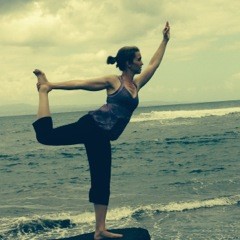 On this retreat that just wrapped up on Sunday, each morning I led the group through yoga and meditation, sharing with them a framework for understanding how life force energy flows in the body – and how the balance of that energy in their body affects them emotionally, spiritually, psychologically, socially, and physically. Each member of the group also received one on one coaching and Reiki from me, supporting their individual breakthroughs and positive transformation. (Note: Reiki is a form of energy healing said to be of spiritual origin.)
If you know you want to be a part of the next transformational and healing spiritual retreat with me in Bali, let me know now by replying to this email.
MORE FREEDOM & JOY NOW
If you can’t wait for Bali, and you want to know how you can experience more freedom and joy in the present, reply to this email and we will find a few minutes to talk about your situation.
by Erin Owen | Jul 23, 2014 | Ezine
How do we form new habits? And how can we change old habits that don’t serve us?
New research1 on the brain is revealing exactly how new habits form in 3 steps:
- Experiment: We explore a new behavior (which involves the prefrontal cortex, the striatrum, and the midbrain)
- Practice: We repeat the behavior creating a feedback loop (between the sensorimotor cortex and the striatrum)
- Benefit: The habit gets imprinted in the brain (with help from the infralimbic cortex)
Like Walking Through a Jungle
If you’ve worked with me privately, you may recall the image of creating a new pathway in the jungle that I describe when it comes to trying out new practices.
The old pathways you’ve walked are easy to see. The dirt beneath your feet is clear, there is space side to side between the foliage, and you can see up to the canopy of the trees and beyond.
When you begin to try out a new practice, it sometimes requires getting out a machete to chop away at branches and vines to create a new pathway. It takes a bit of work and it can be tiring. But over time, as you walk the path again and again, the old path grows over and is harder to see or walk. The new path gets easier and easier to walk.
This new path in the jungle is like the new pathway in the brain. (You can put away your machete now!)
We’ve known for a long time that change can be uncomfortable. We feel resistance inside of us.
It all begins with mindfulness about your own behaviors. That means cultivating greater self-awareness through practices that allow you to quiet your mind and observe what is going on inside that head of yours… and inside that body of yours.
I learned more than a decade ago in my study of mind-body medicine that the mind can heal the body and change its patterns. And you can influence how your brain works and support easier change and successful adoption of new habits and Platinum PracticesTM by trying out some simple practices.
 (1) HEALTH Nutritional Tip
Make sure that you are continually drinking lots of water and getting healthy omega-3 fats in your diet. Neuroplasticity—or the ability of your brain to change, heal, and form new connections—is supported by a omega-3 fatty acids.2 This is critical for breaking bad habits and forming new healthy habits.
Why do you need omega 3? A good balance of omega 3 (anti-inflammatory) and omega 6 (pro-inflammatory) fats in your diet supports the creation of new pathways in your brain, which leads literally to flexible thinking.
It’s much harder to make a change that requires the support of your brain if you can’t flex your brain. The tissues are more rigid and harder to change when you have an excess of omega 6 (pro-inflammatory) fats in your diet. (Imagine trying to push a cart down a hallway that is full of clutter – it’s not easy!)
Instead, increase your intake of things like coconut oil, avocado oil, olive oil, chia seeds, flax seeds, wild fish, and—if you are a meat eater, strive to take in only 100% grass fed animal protein. Why? Because the nutritional research shows that grass fed animals have a much higher level of omega 3 fats in them. For example: 100% grass fed beef can have the same omega-3 levels as wild salmon!
 (2) MINDSET Self-Awareness & Body Connection Tip
Take two minutes today to write down how you are feeling in your body.
* What makes you feel good and open and relaxed in your muscles and tissues?
* And what makes you feel tense and anxious and rigid?
Your body is really smart and your emotions affect how your body feels.
Your body will tell you what is working well for you and your life. This applies to relationships, work activities, social situations, and other things.
Practice this two-minute exercise and cultivate greater self-awareness and connection to your body so you know which habits serve you well, and which need some shifting.
(3)  MINDSET Visualization Tip
I mentioned earlier that change can feel uncomfortable and awkward and you may resist it.
Visualize yourself walking a new path!
Instructions: Sit quietly and breathe deeply for a minute or so. Then imagine yourself walking in a jungle, just like the one I described in the introduction.
Imagine yourself holding a machete and carving out a new pathway for yourself. See the earth beneath your feet. Feel the amount of open space around you. See the open sky and tree canopy above you. Breathe freely and experience positive vibrations in your body.
Set an intention to do this in creating a new positive habit that supports the vision you have for your life. Follow the 3 steps outlined in the introduction: Experiment, Practice, and Benefit.
 (4) HEALTH Energy Tip
Often when you’re in the middle of change, you feel anxious. That often results in you holding our breath and getting stuck in your head with lots of anxious thoughts.
Use the power of your conscious awareness to instead push your attention and energy downward to the earth to help yourself feel grounded. Literally imagine your energy flowing from your head down through your body and through your feet into the earth like an anchor dropping to the bottom of the ocean.
Feel strong and steady with your rooted feet on the ground. Feel solid and steady with deep belly breaths.
Imagine this downward rooting of your energy while breathing consciously a couple times a day to press the energy down and feel grounded and more stable through the changes you are making.
If you’d like to talk more about how to implement these tips or other strategies for making positive change and creating a healthier, happier, more productive life, let’s talk! Email me and we’ll schedule just 15 minutes to focus just on you.
1“The Neuroscience of Habits: How they form and why they are so hard to change,” Scientific American, June 2014. To find out whether obsession is a habit, see ScientificAmerican.com/jun2014/graybiel.
2 Dr. Perlmutter, author of Grain Brain and many more helpful resources, explains this clearly and simply on his website here: http://www.drperlmutter.com/process-neuroplasticity/
by Erin Owen | Jun 24, 2014 | Ezine

In this post, I share two recent studies that highlight reasons why you want to avoid stress (or at least do your best to reduce stress) and a few tips you can use NOW to reduce your stress level.
Click on one of the following links to read more:
New Study Explains Why Stress Can Cause Heart Attacks
Stress Linked to Short Term Memory Loss As We Age
And a few tips to reduce your stress level NOW:
- Look at your calendar this week and identify two non-essential appointments that you can politely cancel or reschedule for when you have more space in your life. Feel you can’t possibly do that?
Consider the #2 regret of the dying: “I wish I hadn’t worked so hard.”
- Step away from your work (or your desk) at least once every 90 minutes and take a break. Close your laptop (or flipover your tablet or turn off your monitor), step away from your work area, stretch your arms up high, take at least 3 deep breaths, get a glass of water, maybe have a small healthy snack, (if possible) take a lap around the office or walk up and down some stairs or even get outside for some fresh air. All it takes is 3 to 5 minutes – not much time!
Read more about the 90-minute solution and your body’s basic rest-activity cycle here.
- Stop worrying! This is one of the 3 tips I share in the 1st lesson of my foundational course on how to boost your performance by simplifying and decluttering your life at every level. Ask yourself: “What am I worrying about? Why am I worrying about it? What can I do to let go of the worry?”
Consider the #5 regret of the dying: “I wish that I had let myself be happier.”
Still not convinced you are worth it, or not sure you can follow-through? Call me – Let’s talk about how to shift your mindset, your priorities, your practices so you can work less and enjoy life more.
by Erin Owen | Jun 17, 2014 | Ezine
Do you label yourself as…
- Not attractive enough to…?
- Too introverted to…?
- Not good enough to…
- Too busy to…?
Do you hold onto associations from your past that define your so-called strengths and possibilities, or weaknesses or limitations? For example…
- …because you are from a small town, you have or have not been able to do certain things in your life?
- …because you went to a certain school, you can or cannot achieve certain things?
- …because of your gender or age or skin color, you are or are not allowed to act a certain way?
Do these ideas you have about yourself limit you? If so, in what way?
If you feel that these are limitations imposed on you by the culture or society or family in which you live or company in which you work, do you accept or challenge these limitations?
I invite you to OBSERVE what is going on inside of you and around you and ask yourself:
- “what is real?”
- “what is truly “fact”?”
- “what can I consciously choose to let go of?”
- “what might be possible?”
The practice of yoga emphasizes letting go of material associations like labels and job titles. For years, I’ve been shedding layers of “fiction”—my ideas (that are not truly real) about who I am or what I’m capable of accomplishing or who I’m capable of being in my life.
I’ve recently been examining some of the declarative statements I make about myself to dig down another layer.
Running!
For example, last year I asked myself “Why do I always say that my husband is the runner and I’m the yoga person?” And I started jogging up and down the rock- and root-filled trails in the Wissahickon woods near where we live. Wow – how amazing it is to be grounded in nature, plugged fully into each moment and each breath, testing the capabilities of my physical form and my mental state.
Golf!
And this past weekend, I asked myself “Why do I take pride in being the only one in my family who does not play golf? How can my experience with this sport from nearly 30 years ago possibly determine what it might be like for me to try it out now?” And so, as a gift to my father for his 70th birthday, he and I went to the driving range to hit a bucket full of balls.
GOLF! Who knew?
I relaxed my body and quieted my mind. My body immediately remembered the grip, the stance, the head position. And I was open to the suggestions my father gave me. Each tip absorbed in my awareness, integrated into my being, resulting in better and better swings, longer and longer distances.
And what joy! What joy at hitting the ball 100, 120, 150 yards. What joy at being outside surrounded by green grass and blue sky. What joy at spending time one-on-one with my father, doing something he is truly passionate about.
 What joy at letting go of another limiting belief. And who knows where it will take me?!?!
As you know, I’m continually looking for ways to improve my personal and professional performance. I prefer to experiment on myself—using my own life as the laboratory. Then, when I find a new activity or practice that delivers, I share it with you!
One of the biggest challenges you face as you age is keeping your brain fit and nimble. That requires a healthy diet, meaningful socialization, and actively challenging your brain.
I encourage you to improve the quality of your life and generate better results by engaging your mind and your brain. How?
- Learning a new skill
- Cultivating a new relationship
- Traveling to a new place and experiencing a new culture
- Tasting a new food (or a food you haven’t tried for years)
- Letting go of an old belief that is holding you back – something that will help you do all of the above!
Do it! Surprise yourself!
Be compassionate with yourself. Be ready to laugh at yourself. Ask others to encourage you and support you.
And let me know what you experience!