If you’ve been reading my newsletters these past few months, then you know I did something quite unusual in September: I went camping in nature on my own for 3 days and nights. Prior to committing to this initiation in nature, I had previously only camped once as an adult—and that was with my husband and the full support of two experts who packed and carried all our gear. This time around, I was on my own.
Why did I decide to step way outside my expertise and comfort zone and do this?
In what ways did I push my boundaries and handle the challenges I encountered?
What lesson did I learn from stepping out of my comfort zone?
Read on to learn more, and perhaps you too will be inspired to create your own stretch experience to cultivate your resilience and grow as a leader.
The “WHY”
Back in February when I first came across information about the nature solo, every fiber in my being said: YES! DO THIS! Rationally it did not make sense. I owned exactly zero pieces of camping equipment, had almost no camping experience, and had never spent a night alone in nature. Oh, and did I mention that I had only recently finished physical therapy and was still building back my strength after struggling with some upper back problems? Would I seriously commit to haul all my gear at 7,000’ altitude and live on my own in the wild for 72 hours? Yet, the solitude, the call of the land, and the waiting gift of no emails and no responsibilities, was seriously appealing to me. After a brief conversation with my husband to confirm he was 100% supportive and happy to steer the household ship for a week, I signed up.
What Boundaries did I Push?
Each of us has our own comfort zone, and so our boundaries will also be different. Yes, I had previously climbed Kilimanjaro, and yes, I had previously lived and worked in China, but that was all years ago before children and being my own boss. In this case, my boundaries were more internal. The following questions and self-doubt arose in my mind:
Could I trust myself and my capabilities?
How would I handle any fears that arose without a friend, peer coach, or partner I could talk to?
What about no cell reception coupled with wild animals?
What about the complexities of back-to-school season?
Am I really going to leave my husband and kids on their own just 3 days after the school year has begun?
It turned out that the six months of preparation were all part of self-discovery and overcoming self-doubt. Each time I researched and purchased another piece of equipment, I would pause: am I really doing this? I’m not someone who camps, and yet here I am getting ready to do this! I had to remind myself of the full support and excitement my husband had for me, and practice letting go of any fictionalized scenarios that would start playing out in my mind. Ultimately, the bigger boundaries I pushed were woven into the challenges I faced on the ground – or I should say on the mountain and boulders of the northern New Mexican desert-meets-forest terrain where I camped.
How I Managed The Challenges, Fears, and Rain
Most of the challenges I encountered were internal: struggling with my own thoughts, fears, and doubts, most of which were not real. When I first signed up for the nature solo, my understanding of the “wildlife” in the area was that there wasn’t much – and definitely no bears or wolves or anything scary like that – and that in all the years of people camping on the land there had never been a problem. Soon after arriving at the base camp, however, in the preparatory debrief I was told that due to the prior year’s fire that burned the 300,000+ surrounding acres, there were now many more animals on the land, including lynx, bobcat, coyotes, bears, deer, elk … and many more animals. I imagine if there had been a video replay of that moment, my eyes would have looked like they were four times their usual size. Gulp. I was given instructions on how to keep any food in a sealed container far away from my tent, and how to dig a latrine and bury waste, all to keep the animals away.
Prior to departing on the trip, I had been advised to do some research on how to hang a bear bag, an odor-proof bag (or can) that bears cannot reach. But since there were no bears, I did not bother to learn how. Without a cell phone or the internet – did I mention that I was completely free of technology for those 72 hours? – I tapped into my early childhood tree climbing and knot-tying skills to MacGyver a solution. [MacGyver is a reference to a 1980s US television show that featured a main character who could make or repair anything using incredible ingenuity and creativity.] In the process of scaling the trees with few branches, I did earn quite a few scrapes and scratches that first morning on my campsite, and was grateful to have taken along a first aid kid that I quickly put to use. But, I did it! And it worked well as a solution for my whole time on solo, and those two trees between which hung my rope and bag of food, quickly became my outdoor kitchen and bathroom area, which I visited at least 3 times a day as part of a daily routine that quickly and very naturally took shape.
During part of the trip, wild animal sounds, torrent rainfall and the darkness of the dead of the night induced feelings of sheer terror inside of me. My adrenaline, fear and racing mind were my biggest enemies. Using tools such as yogic breathing practices (pranayama), visualization, mantras, self-story-telling, singing, and more I attempted to manage my fears. After six long hours of a cacophony of grunts, growls, snorting, and squeals, I thankfully made it through the night alive without actually seeing or being directly bothered by an animal. Then came the pounding rain for 24-hours straight making it challenging to do anything including eating. I did feel well prepared with my rain gear, the tent’s rainfly and an extra camp tarp my intuition kept bugging me to buy (thank you gut!). But the reality of living life fully outside when it was raining was rather perilous, and made me grateful for the cozy home inside my tent.
The Lesson
I laughed a lot at myself that next morning and felt great relief at being able to discover that I had only been prey to my own fears, not some fictionalized coyote-bear-deer-monster. I took further pause to pat myself on the back for braving the elements and inclement weather. For me, this was a real lesson in the power of the mind to make things up and make situations worse. It had me thinking about the quote from Seneca, “We suffer more in our imagination more often that in reality.” I know it is something that my coaching clients frequently struggle with when they are stressed, lacking confidence, missing information, or struggling with the shenanigans of their own mental saboteurs. It’s an important lesson to learn: when our brains and bodies go into that ‘Fight or Flight’ response, we need to use the tools I mentioned above to regulate our nervous systems and quiet our mind, body and spirit.
How I Grew
My confidence and trust in myself grew tremendously throughout the preparation and actual solo experience. The experience of facing my fears, being able to laugh at myself, and successfully handle all the challenges that arose has resulted in me appreciating and loving myself more. As I was able to observe a need, creatively utilize what was available to me in my surroundings, and take action to either solve a problem or create something new, a type of seamless creative flow was affirmed. I’ve noticed since I returned that I am clearer and more decisive, and also, I am approaching new challenges with greater ease and less worry.
Nature used to be something I went to on a hike, or looked out the window to see. Now, I know in my bones that I am nature and nature is me: we are not separate; we are one. I have a more innate sense of the time of day and a sense of changing weather. In fact, I am no longer annoyed at the weather, nor consider rain an inconvenience. I simply notice what the weather is doing and live in sync with it, changing my attire and footwear if needed. I feel incredibly closely connected to nature now.
Overall, I feel inspired and impressed by nature, and am noticing a renewed interest in bringing my rising leader clients closer to nature as a way to grow their self-awareness, confidence, and problem-solving skills. While I have no current plans to revive my Bali retreats, I do notice some type of seed has been planted within me that I anticipate will bear fruit in the form of a new offering for clients in the future. As numerous life and career transformations resulted for my clients who accompanied me to Bali over the years, imagine what might result from a leadership growth retreat that involved some type of nature solo? Hmmm….
I recently posted about the direct connection between clutter and your mental wellbeing in my Rising Leader newsletter on LinkedIn. If you haven’t checked it out yet, please click hereto do so.
Clutter directly impacts your brain, in fact, according to Royal Australian College of General Practitioners (RACGP), ‘What Does Clutter Do To Your Brain and Body,’ “Our brains like order, and constant visual reminders of disorganization drain our cognitive resources, reducing our ability to focus. The visual distraction of clutter increases cognitive overload and can reduce our working memory.” Kerry Thomas, Organizing and Productivity Consultant, suggests in the article written by Inc ‘The 5 Types of Clutter That Are Destroying Your Peace of Mind,’ “We don’t just feel overwhelmed because our closets, inboxes, or to-do lists are overflowing (though that’s certainly often a contributing factor). Our minds and our consciences are just as often messy and stress-inducing.” Thomas teaches her clients to address the five key types of clutter:
Physical clutter – This is the typical stuff we think of — the closets that are overflowing, the garages that can’t hold cars, the storage units that have become a billion-dollar industry in the U.S. alone.
Digital clutter – Have thousands of unread emails in your inbox? Then you have digital clutter. But it’s also all the files saved on your computer without naming conventions, so you don’t know what they are and you spend a lot of time looking for the ones you want.
Mental clutter – This could be your fears, your to-do list, what’s going on in the news, or anything else that’s filling your head at night.
Emotional clutter – This type of clutter consists of negative patterns and beliefs you don’t even realize that you’re carrying around and can include can’t statements like I can’t lose weight or I can’t quit my job and own my own business.
Spiritual clutter – This is a lack of forgiveness or a lack of peace.
Clutter can present itself in many forms such as an old belief system, a toxic relationship, an old resentment, negative self-talk, too much time spent on social media, binge-eating, or an unwillingness to change. It can hold you back and keep you stuck in negative habits and patterns that no longer serve you both personally and professionally. Read on to learn some powerful tools that can help you DECLUTTER your life, and set you on the road to freedom and your higher self.
Do you feel like you are drowning in a sea of clutter? As we begin to transition into the cozy, calmer months of Autumn in the Northern Hemisphere, now is the perfect opportunity to DECLUTTER your life. Clutter is not just physical, it is anything that is holding you back from connecting with your authentic, highest self. Did you know that emotional, digital, mental, physical and spiritual clutter can be damaging to your mental health? Holding on to too many things can negatively impact your wellbeing…
Please read, like, and comment on my September 2024 LinkedIn article by clicking here.
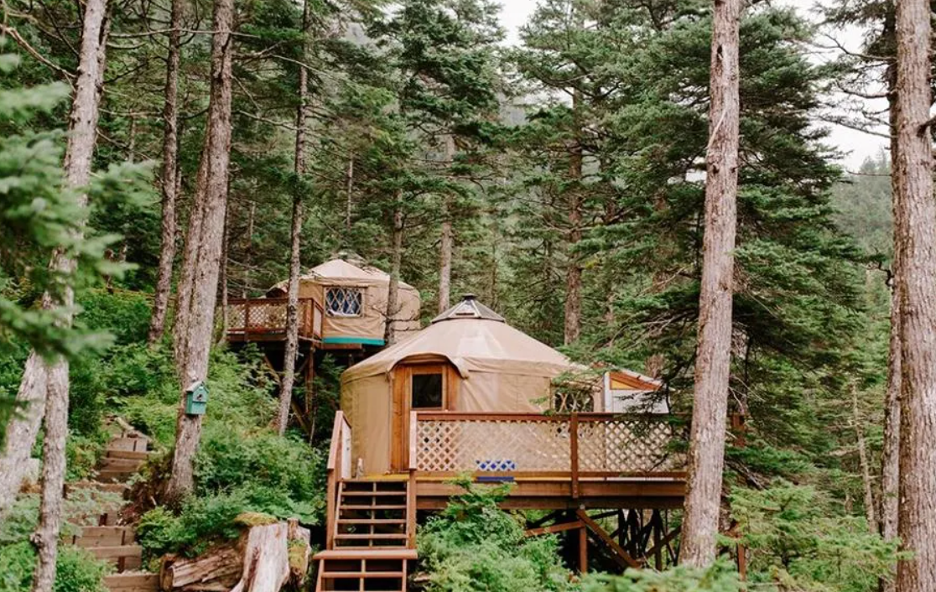
In July, I had the restorative experience of staying in a cozy yurt in Vermont surrounded by nature, and located on a six-acre farmstead. I cannot tell you what a gem this little tiny home is complete with an outdoor shower. This stay provided me the quiet time to reflect, restore and rejuvenate all while being one with nature. It gave me the time to get my creative juices flowing as well. I did some journaling and let the sounds of nature inspire me. You can check out this incredible yurt on Airbnb by clicking here.
This month my family and I returned to Northern Coastal Maine. This spot is near and dear to my heart as we have been visiting it each summer for over 20 years. And the first time I visited this place was on a short trip home to the USA in 1997 when I was living in Shanghai. We rent a cozy cottage adjacent to the Petit Manan Wildlife Refuge, a 250-mile reserve off the coast of Maine that supports diverse habitats including, coastal islands, forested headlands, estuaries and freshwater wetlands. From breathtaking coastlines to historic lighthouses and species galore, it is hard not to relax in this serene sanctuary. The cottage is next to a field of wild blueberries, and this year we discovered two new hiking trails that ended with breathtaking views of inlet coves. I even took a dip in the chilly Atlantic waters with my sister in law, which truly felt like a cleanse for the body and spirit. The sights and sounds of eagles, osprey, gulls, and other birds spoke to my soul and we were thrilled to see a return of the deer throughout the seaside and inland meadows.
In September, I plan to do a solo camping trip in the mountains in New Mexico. Although it has been many years since I traveled on my own for pleasure, I find solo travel to be an amazing way to awaken my spirit and partake in some deep reflection. It forces me to get real with myself and my thoughts. It can ignite creativity and spark my soul. While there can be moments of anxiety and worry, especially when I encounter unknown situations, overall, I find it to be a transformative experience that connects mind, body and soul. I find solo travel to be essential for healing and growth. It can show you just how strong and resilient you are. Preparing for this upcoming trip to New Mexico has challenged me to get more fit, practice carrying my back-country pack full of gear, and prepare to be off grid with no distractions — not even reading books or art supplies. Just me in nature. I will let you know about my experience and what I learned in my October ezine. Seeking silence and solitude is truly a method of self-care. It is important to quell the chaos and noise of your daily lives. Getting back to mother nature is the perfect way to catch your breath, decompress, and remember that we as human beings are part of nature. Support your family, friends, colleagues, and teams by encouraging them to get outdoors and connect with all aspects of nature. Check out Forbes “12 Of The Most Unusual – And Beautiful – Yurts To Book A Night At Around The World,” for some outdoor inspiration. You will be amazed at what one night away can do to replenish your soul. The yurt I stayed at in Vermont is included in this extraordinary list. Clickhere to read the article in your entirety. Or if yurts are not your thing, try another unique experience to get yourself more immersed in nature.
Photo from Forbes article above
I encourage you to book a day or two and get outdoors! Get creative and find ways to immerse yourself in nature. You will be amazed at its healing, restorative and transformative benefits. Let Mother Nature be your ultimate inspiration. “In every walk with nature one receives far more than he seeks.” –John Muir
One of my great loves in coaching is incorporating movement and activating the intelligence centers in the body. While I have found it easier to do this with the guidance of a coach or a colleague, I have also been successful in doing this on my own. Perhaps you’ll try this exercise on your own and have some incredible insights about a current opportunity or challenge! If you do, let me know what you experience and what comes from it. Would love to hear what you learn!
INGREDIENTS:
A patch of open space
A way to record notes
A single opportunity or problem you wish to explore
An open-mind
Before you begin, assess your physical space. Is there a (roughly) 4’ x 4’ area in which you can move around? Having even more space is better, but a nice four-foot square patch of rug or floor or grass or concrete will do. After that, simply have your smart phone handy (I like to use my Notes app and dictate to Siri, or sometimes I record the whole exploration using my Voice Recorder app) or use a journal or notebook with pen to write down your discoveries, and follow these steps…’
DIRECTIONS:
Define your focus/topic: Which current opportunity or challenge do you want to know more about?
Stand in the middle of your square and state out loud: “I am open to learning more about…”
Option: Write the name of your focus/topic on a piece of paper and place it in the middle of the square.
Then, step to the South side of your square and turn inward to face the center of the square. If you don’t know which direction is South, just pick one side of your square and think of this as the bottom or South side.
From the South side, ask yourself one or more of the following questions:
“What do I know to be true about this opportunity/challenge?”“
What conditions are supporting it?”
“What conditions are constraining/limiting it?”
“What else would be helpful for me to know about the conditions or circumstances surrounding this?”
When you feel complete with this side, step to the West side of your square and again turn inward to face the center of your square.
“How am I feeling about this opportunity/challenge?” For each emotion/feeling, explore further:
“What would be helpful for me to know about the … (you fill in the emotion here) I am experiencing? “
“What is contributing to it?”
“What is its source?”
Once you feel complete with the first emotion/feeling, move on to the second, and so on until you’ve explored all the feelings you have about this opportunity/challenge.
If you find you start to plan or strategize or get into action mode, simply take a breath and tell yourself “not yet, but soon…”
Final question from the West: “What else would be helpful for me to know about the emotions related to this opportunity/challenge?”
Once you feel complete, step to the North side and then face in toward the center of your square.
“In what way is this opportunity/challenge important for me on my life path?”
“What lessons might this experience have to offer me?”
“How might I grow by living through this opportunity/challenge?”
“What allies or supporters are available for me as I move forward?” [For each one that comes to mind, explore further:
“How can I best make use of what … has to offer?”
Once you feel complete with the first ally/supporter, move on to the second, and so on until you’ve explored all the support you have available to you for this opportunity/challenge.
“What else would be helpful for me to know about what this opportunity/challenge has to offer me on my path?”
Once you feel complete, step to the East side and turn to face in toward the center of your square.
“What is clear to me now?”
“Who will I work with as I move forward?”
“What additional resources would I like to invite in as I move forward?”
“What next steps are ahead of me?”
“What am I most looking forward to?”
“Who can support me with the more challenging aspects?”
“What do I want to remind myself of as I move forward?”
“What else would be helpful for me to take the next step?”
Once you feel complete with this side, then step back into the middle of your square.
Take a moment to center within yourself and express gratitude to all the intelligence and creativity that showed up to support your exploration.
For any allies or supporters that came to mind, take a moment to thank each one, one by one.
Say any final words to yourself to close the exploration.
Once complete, step out of the center of the square. Take a deep breath and move on with your day.
Documenting Breakthroughs and Insights: What do you prefer?
You may now see why I prefer to record my voice as I go. But if you’re taking notes on paper, you choose if you want to do so throughout or wait until the end to jot down the key notes you want to remember.
Self-Guided or With Another: Some Tips
When you move through the Four Direction Exploration on your own, this is considered a self-coaching exercise. You can also do this with the guidance of a coach or a colleague. When working with someone else who is not a professionally trained and credentialed coach, be sure to have them prompt you with open questions only and to say “Anything else before moving to the next side?” to close each step. And kindly remind them that you do not need any opinions, suggestions, or advice. You only need a guide and a witness.
Years ago, Simon Sinek and others wrote a series of books dedicated to helping leaders discover their purpose and make that the focal point for their work in the world. He called one’s purpose the “why” and defined it as “the compelling higher purpose that inspires us and acts as the source of all we do.”
My coaching work is 100% aligned with my purpose, but I did not “discover” this until I was in my 30s. And by the “this” that I discovered, I mean both my purpose and the work that aligns with my purpose. Talking about purpose and inspiration is not at all a new concept, but I know that many leaders have never paused to consider their “why.” If this is you, I invite you to read on and learn how aligning your choices to your purpose can accelerate positive growth in your life and career.
There are hundreds of books that have been written about clarifying your purpose and aligning your life and work with that purpose. Career books, self-help books, spiritual books, business books, and much more. Over the years, I have owned and read many of them including:
Why You Need a Clear “Why”
Think of purpose or “why” like the destination you enter into your GPS. It tells you where you’re headed and gives you guidance for what turns to make along the way. When both you and your coach are clear about your purpose, then the topics you explore and the actions you take coming out of each coaching session will support you in living and working more in alignment with your purpose. You are then more likely to be successful in living a purposeful or purpose-filled life; a life that is meaningful and impactful in a way that tells you that you matter and your contributions to the world make a difference.
The Role of Purpose in Coaching
When working with a coach (or when you are taking a coach approach to people management or parenting), it’s important to first clarify where you are headed: both in the immediate term and in the long term. There are many approaches to defining purpose and I have utilized many of them in my work with clients.
Is there a Difference Between Capital “P” Purpose versus Lowercase “p” purpose?
Ask yourself the coaching question: “What is the purpose of work for you?”
You may respond with a practical response such as “to pay the bills” or a more filial response such as “to live out my parents’ dream.” Or your response may be something more spiritual such as “to fulfill my calling.”
Ask yourself this next coaching question: “What is your purpose in life?”
Your response will likely be a bit different from your response to the first question above. It may be related to your day job or instead have nothing at all to do with work. You may not know exactly what your purpose in life is, or you may be totally clear about it and use it as your guiding star day in and day out.
When the response you give to this second question sparks warmth in your chest or otherwise feels alive in your body, that usually indicates you have discovered your capital “P” purpose – that GPS destination that inspires you to keep going through challenges, that makes life feel more worth living, and that often involves you taking actions that have a positive ripple effect through your family, community, or beyond. If your response feels solid and right in your head, but does not necessarily cause a spark, then your purpose is equally worthy but more likely to be a lowercase “p” purpose. It still gives you direction, anchors your decisions, and makes sense for what is important for you.
Why do I distinguish Capital “P” and lowercase “p” purpose? We could have a long and engaging debate about this topic, and at the end we will likely conclude that we both have valid opinions on this topic. My view is based on my own life experience and what I have been blessed to witness in coaching with my clients these past two decades. With confidence, I believe that the capital “P” purpose is where the real juice is. Once you know it, you feel greater motivation and self-confidence. Clarifying and naming your purpose and then taking actions in support of your purpose can be so powerful that the process can even generate mental, emotional, and physical healing. Before discovering your capital “P” purpose, it’s almost like you had been living your life all along with a missing part. And once you plug in that part, your internal engine kicks in at a higher gear, allowing you to hum along at a higher vibration with greater efficiency and power.
How to Find or Clarify Your Purpose?
Read any of the books above and you’ll find guidance on how to do this. In my experience, it requires three components: reflection + self-awareness + some type of external input and/or confirmation.
Reflection in this context can involve looking back at the key events that have shaped you, noticing which people and what events have been your biggest “teachers”, identifying repeating patterns or challenges, and distilling the lessons learned. The role of self-awareness with purpose involves observing what is happening in your life with curiosity and clarity, recognizing what is and is not working for you, and being willing to change directions (even when it may not seem rational or linear) to move toward your desired GPS destination.
The external piece can be anything from taking a fun old school magazine quiz to “find your purpose” to completing a more robust and formal assessment. It could involve something more spiritual like accessing your Akashic records or discussing your life blueprint with someone trained to interpret your birth date and location using Vedic methods. And more recently, as the topic of psychedelic-assisted therapy has grown in popularity, some people are using plant medicine to explore deeper questions about their life and purpose.
When I teach coaching skills to professionals, I share a set of copyrighted questions that help build self-awareness in the client. Each answer to a question acts like a puzzle piece. Once the pieces are put together in a coaching exchange, the picture of your purpose then becomes clear.
Other ways clients sometimes clarify their purpose cannot be planned. I have coached clients who lived through a near-fatal health crisis, or climbed their way out of a damaging relationship, only to accumulate through the experience some incredible clarity about what they do and don’t want in life and why, leading them to clarify their purpose. Lastly – and much more rare – is the case of people who have a lightning bolt type insight, sometimes called claircognizance (clear knowing), that makes their purpose known to them clear as day in a single moment.
How reflection + self-awareness + some type of external input all come together in coaching is by exploring ideas to clarify what really feels right in your bones and having the coach mirror back to you the emerging thoughts so you can hear them and digest them. Ultimately, you document in writing your purpose statement and use it as your GPS destination to influence your priorities and guide your decisions.
How Aligning Your Choices with Purpose Accelerates Growth
As mentioned earlier, once you clarify your purpose, it’s like plugging in a previously missing piece to your internal engine in a way that kicks you into a higher gear, allowing you to hum along at a higher vibration with greater efficiency and power. You feel more energized, you experience less friction in life, you have greater certainty about what you want to do and not do, your confidence grows, and cumulatively you realize greater satisfaction and well-being in life.
Living and working with purpose is not about ego, nor the material goals of job titles and bank accounts, although new roles and financial means can go hand-in-hand with walking in alignment with purpose. Aligning your choices with your purpose can accelerate positive growth in your life and career in a way that radiates a positive wave of energy and influence through your social, family, and work circles.