
by Erin Owen | Jan 16, 2023 | Coaching Tips
Listen to what others have to say at the 3rd level. What is the 3rd level? Also called “global listening”, this involves tuning into everything about the other person, yourself, and everything in your environment all at the same time. This includes noticing your own bodily sensations, sensing the other person’s energy, being aware of all your emotions and intuiting the other’s emotions, utilizing all your senses to notice what’s happening around you, and much more. At Level 3 you notice as much about what is present as what is not present, what is said and what is not said. At my mastery level of coaching, this is the type of listening I practice with my coaching clients.
If Level 3 listening seems like too much of a stretch for you, and it’s not clear how you would begin to practice it, I invite you to practice more mindful Level 1 listening, or perhaps try out Level 2 listening, both described below.
Level 1 listening is one way and focused solely on you. You’re aware of your own feelings, thoughts, judgments, and circumstances. At Level 1, you are not thinking about the other person. More mindful Level 1 listening invites full awareness of your own experience so that you are not speaking on auto pilot and not subconsciously controlled by your mental saboteurs. Less mindful Level 1 listening is often evident when you notice you are primarily waiting for the other person to finish talking so you can tell them what you have to say.
Level 2 listening is more focused and observant of the other person. You notice their body language, their breathing, the tone and nuance in their words. At Level 2, you may not be aware of your own internal dynamics, but you are definitely more tuned in to the other. Level 2 can be practiced with one person or a group of people as in a meeting. At this level, you are not aware of what’s happening in the literal or figurative world around you. Mindful Level 2 listening generates greater empathy, as you have the presence of mind to not make assumptions; you ask clarification questions and seek to better understand the other. In addition, with your focus on the other, you wait for an appropriate moment to speak, if you choose to speak at all.
Enjoy experimenting with this month’s coaching tip, and be in touch if I can answer any questions you have about your learning experience, or if you’d like to invite me to teach coaching skills at your organization!

by Erin Owen | Sep 15, 2021 | Ezine
I hope this newsletter finds you healthy and well. Autumn here in the Northern Hemisphere is right around the corner. How are you feeling about the change of seasons? Are you excited, or holding onto the summer months forever? For many, seasonal changes can affect their mental health, mood, outlook and overall wellbeing. Personally, I love the change of seasons, and I feel my best in Autumn. I view the change of seasons as a golden opportunity for rebirth and transformation. As the air gets crisper, pumpkin spice lattes appear, and a kaleidoscope of amber and crimson illuminate our trees. I feel it is the perfect time to focus on the glorious gift of gratitude. What better way to count our blessings, and give thanks than to practice gratitude daily? With so many challenges in our daily lives and larger world, now more than ever we need to shift our mind’s focus to the abundance that exists right here and now, don’t you agree?
With an appreciation for renewal in our hearts, I hope you will join me in participating in a 21-Day Gratitude Challenge. Let’s make a commitment, and together cultivate gratitude for the next three weeks. I bet you’ll be surprised at how life-altering the practice of gratitude can be!
The Benefits of Gratitude
I practice gratitude on a daily basis in the form of noticing in numerous moment throughout the day what I am thankful for, an ingrained practice that began 20+ years ago with first reading about, journaling about, and talking with others about the practice of gratitude.
Scientific evidence is well documented to support that consciously practicing gratitude will benefit you and your mood, so why not try it or resume or strengthen your existing practice? A shift in your perspective to focus on the positive rather than the negative, and to focus on what you have rather than what you do not have will dramatically create a positive paradigm shift in your life.
Positive Psychology compiled findings from multiple studies to highlight 28 benefits of practicing gratitude. You can read the full article, and review the fascinating finding by clicking on the link here.
The benefits are split into five key categories listed below:
EMOTIONAL benefits of practicing gratitude:
1. Make us happier
2. Increase psychological well-being
3. Enhance our positive emotions
4. Increase our self-esteem
5. Keep suicidal thoughts and attempts at bay
SOCIAL benefits of practicing gratitude:
6. Make people like us
7. Improve our romantic relationships
8. Improve our friendships
9. Increase social support
10. Strengthen family relationships in times of stress
PERSONALITY benefits of practicing gratitude:
11. Make us more optimistic
12. Increase our spiritualism
13. Make us more giving
14. Indicate reduced materialism
15. Enhance optimism
CAREER benefits of practicing gratitude:
16. Make us more effective managers
17. Reduce impatience and improve decision-making
18. Help us find meaning in our work
19. Contribute to reduced turnover
20. Improve work-related mental health and reduce stress
HEALTH benefits of practicing gratitude:
21. Reduce depressive symptoms
22. Reduce your blood pressure
23. Improve your sleep
24. Increase your frequency of exercise
25. Improve your overall physical health
26. Help people recover from substance misuse
27. Enhance recovery from coronary health events
28. Facilitate the recovery of people with depression
21-Day Challenge
Now that you know all of the transformative benefits of gratitude, let’s begin the challenge. I am so excited to do this with you! There is no right or wrong way to practice gratitude. The key is to practice it daily and make it a priority. Give thanks to experiences, people, moments, simple pleasures in life: whatever it is that you are grateful for. Listed below are some ways in which you can practice gratitude during the next three weeks:
- Gratitude Meditation – This is one of my team’s favorite ten-minute meditations. My colleague Stacie likes to do it before she gets out of bed, and it starts her day off on a positive note. Click the link https://m.youtube.com/watch?v=SZ2coj1fFec to try it.
- Gratitude Journal – This is such a simple yet effective way to practice gratitude. Start your morning off by writing down three to five things you are grateful for you. Notice how you start your day in such a happier manner.
- Gratitude Affirmations – Practice gratitude affirmations such as “I am grateful for this day”, or “I am grateful for my family”. These are simple sayings that can boost your mood and make you feel happier.
- Acts of love & kindness – Practice gratitude by engaging in acts of love and kindness. These do not need to be big gestures, they can be as simple as telling your family you love them, or telling a friend you appreciate them. I notice my team members light up when I express my gratitude for their diligence or attention to detail or graciousness expressed in an email to a client, and in return I too receive a surge of joy in seeing them light up.
- Smile – As William Arthur Ward once said, “A warm smile is the universal language of kindness.” Smiling helps release cortisol and endorphins thus boosting your mood. It is the easiest act we can do.
There are so many more ways in which you can practice gratitude. Switch it up each day during our challenge. I invite you to make the commitment to cultivate and embrace gratitude each day in your life and join me for this 21-day practice of gratitude.
I have been mindfully practicing gratitude for years. The positive benefits are truly extraordinary, and will change your life for the better. I would love to hear from if you are committed to start this challenge, and then again once you complete the challenge. Perhaps you put a reminder each morning on your calendar and again an hour before your bedtime to keep you focused and on track?
As you move through these 21 days, let me know: how do you feel? what supports you in continuing? Let me know if you notice a positive difference in your heart, mood and spirit. I hope you will continue past the 21-day mark, and turn the practice of gratitude into a daily habit that feeds your soul.
Sending love and light to you! Erin
by Erin Owen | Feb 1, 2016 | Ezine
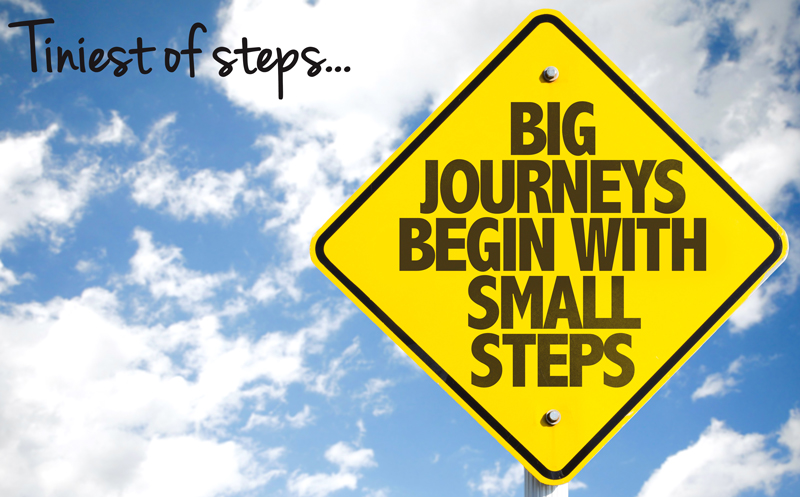
When faced with exhaustion and overwhelm, there can be the sense that everything has to change. Your work, your relationships, your living situation, your weight, and on and on.
And yet that feels even more overwhelming. And so you shut down.
But what if you imagined the teeniest tiniest step you could take in a slightly different direction. And then break that step down into 3 even smaller steps, and what does that leave? Then take the first of those 3 smaller steps and break that small steps into 3 steps and so on.
Do this until the result is as small as one single step that a centipede might take, or one wing flap of a hummingbird, or one downward blink of your eyelid.
Start here, with the tiniest of steps. Take a breath. Complete it. Take another breath and decide: is that enough for now? Or, do I want to take the next teeniest tiniest step?
You choose.
Transforming your life can be overwhelming. But you don’t have to do it all at once. Start infinitesimally small. And breathe.

by Erin Owen | Jan 18, 2016 | Ezine
I’ve noticed that my five year old can sleep soundly in a room with the lights on, the radio blaring, and people talking in the background. But if I turn out the light, turn off the radio, and close the door, he wakes up in just a few minutes. I myself have had this experience, when sleeping… and in life.
Have you?
If there is a seemingly-never-ending stretch of insanely busy days, with no room to catch your breath, you can go on for awhile. You push through. You push past any discomfort. The cacophony of intensity drowns out your inner voice.
It’s only when you slow down a bit, or are forced by something more significant to hit the brakes, that you can finally hear your inner voice.
 I’ve found it’s easier to hear my inner voice when I make the choice to slow down. Sit and have a cup of tea. Go for a walk. Experience a yoga class. Write down highlights from my day. Play with my kids.
But if I am forced by difficult circumstances to stop suddenly, then it’s like someone has taken the volume dial for my inner voice and cranked it up so loudly that I either can’t bear to hear it or would prefer to jump back into the cacophony to avoid hearing it.
Am I alone, or have you too experienced this?
When I guide clients inward to quiet their minds and hear their inner voices they are often happily surprised at what they learn and affirm. If you have not done this in awhile, I strongly recommend it. I do this with clients on regular coaching calls, as well as in a much longer and more powerful way during retreat days.
If you missed last week’s email that explained the special promotion I’m offering in January only, you can learn more here.
Here’s to you waking up to your inner brilliance!